
06-10-2026
5 minute read
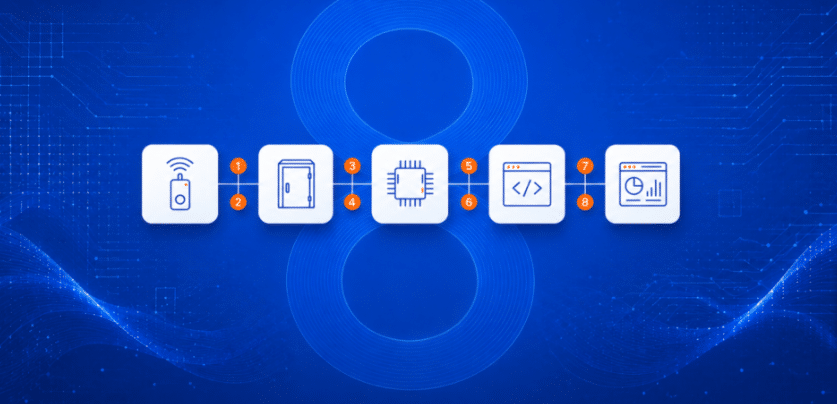
A measurement system is more than a collection of sensors and data acquisition hardware.
Today, industrial teams are increasingly expected to deliver connected test, monitoring, and data acquisition systems while working with limited engineering resources for system integration, cabinet design, software configuration, and commissioning.
The challenge is often not a single component. It is everything that has to work together.
As the distributor of Gantner Instruments, CN Rood sees how important the overall system architecture is when building reliable measurement solutions. Sensors, wiring, data acquisition, power supplies, communication, software, and data access all need to function as one integrated system.
Here are eight areas where integration risk can easily hide.
A modern measurement system can involve sensors, DAQ hardware, cabinets, software, cameras, controllers, and data platforms.
Every interface between these components introduces another potential point of failure.
Connectors, communication protocols, software interfaces, and data transfers all need to work reliably. The more interfaces there are, the more difficult it becomes to identify and resolve problems.
A well-designed system architecture reduces unnecessary interfaces and ensures that the different components are designed to work together from the beginning.
Measurement quality starts at the sensor.
Different applications require different types of sensors and signal conditioning. Vibration, temperature, strain, displacement, current, environmental measurements, and video all have different requirements for sampling, conditioning, wiring, and data processing.
Selecting the wrong sensor concept early in a project can have consequences throughout the entire measurement chain.
Once information has been lost at the sensor level, no amount of downstream processing can fully recover it.
Wiring is sometimes treated as an installation detail. In reality, it is an important part of the system architecture.
Sensor wiring, power supplies, protection, communication, connectors, and cabinet layout need to be considered together.
Planning these elements only after selecting the DAQ hardware can lead to unnecessary complexity, installation problems, and rework.
A well-designed measurement system considers the complete wiring concept from the beginning.
Modern test and monitoring systems often combine multiple sources of information.
Measurement channels may need to be correlated with controller data, events, or even video.
Without reliable time synchronization, it becomes difficult to determine exactly when an event occurred and how different signals relate to each other.
A common and accurate time base allows engineers to correlate events such as load peaks, vibration changes, faults, or defects with confidence.
Measurement systems installed outdoors, remotely, or in demanding industrial environments have additional requirements.
Reliable power, communication, data storage, environmental protection, and local diagnostics can all become critical.
When there is no technician permanently available at the installation site, the system needs to be designed for stable operation and straightforward troubleshooting.
This is why cabinet design and field installation requirements should be considered as part of the measurement system architecture rather than as an afterthought.
Integration problems often become visible during installation or commissioning.
A wiring conflict, incorrect channel configuration, missing signal, communication problem, or software mismatch can suddenly create delays and additional costs.
By the commissioning stage, however, changes are often much more expensive than they would have been during the design phase.
Testing the complete system before installation helps identify integration issues earlier and reduces the risk of unpleasant surprises on site.
Having data available does not automatically mean that the measurement system is delivering value.
Data needs to be structured, visualized, stored, and made accessible to the people who need it.
A system can be technically operational while still failing its purpose if important information never reaches the engineer, operator, or maintenance team in a useful form.
The measurement chain therefore needs to consider not only how data is acquired, but also what happens to that data afterwards.
A prototype that works successfully on one test bench does not necessarily translate into a repeatable system.
When a project expands to multiple test benches, production environments, or distributed monitoring installations, consistency becomes essential.
Documentation, system architecture, configuration, communication, and testing procedures all need to be defined.
A scalable measurement system is designed so that the architecture can be repeated rather than reinvented for every installation.
Reliable measurement is not simply about selecting good sensors or high-quality DAQ hardware.
The real challenge is making all the individual elements work together as one system.
Gantner Instruments addresses this by focusing on the complete measurement chain — from sensors and data acquisition to cabinet design, software, communication, and data access.
As the distributor of Gantner Instruments, CN Rood supports customers in selecting and integrating measurement solutions for demanding test and monitoring applications.
The goal is straightforward:
Reliable measurement data, from sensor to final application, without unnecessary integration risk.
When planning a new measurement system, it is therefore worth asking not only:
“Which hardware do we need?”
but also:
“How will all these components work together as one system?”
That question can make the difference between a collection of working components and a measurement system that delivers reliable results in practice.
06-10-2026
23-09-2026
16-09-2026
16-09-2026

Account Manager & Application Engineer

