
06-10-2026
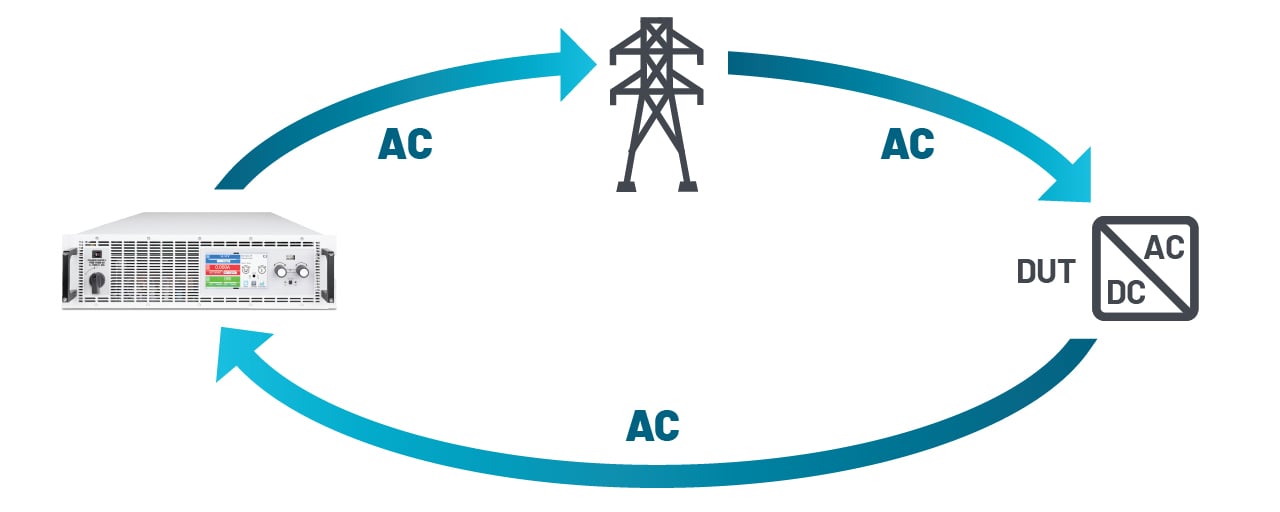
As industries accelerate their shift toward decarbonization and energy efficiency, engineers are under growing pressure to reduce waste during testing. Power regeneration in electronic loads offers a smarter, greener way to recover energy instead of dissipating it as heat. This hub blog explains what regenerative loads are, why they matter, and how they connect to broader power testing strategies like bidirectional power supplies and programmable DC sources.
Use this guide as your central resource for learning how regenerative technologies support sustainability, reduce operating costs, and future-proof your test environment.
A regenerative electronic load is a test instrument that absorbs energy from a device under test (DUT) and feeds it back to the grid, instead of wasting it as heat. This process improves energy efficiency in lab environments and production lines—especially for high-power applications like battery cycling, fuel cells, and motor drive testing. Compared to traditional electronic loads, regenerative systems reduce cooling needs, cut power bills, and align with sustainability goals.
Engineers working in EV development, aerospace, or renewable energy must now balance performance, efficiency, and sustainability. Regenerative loads support that balance with:
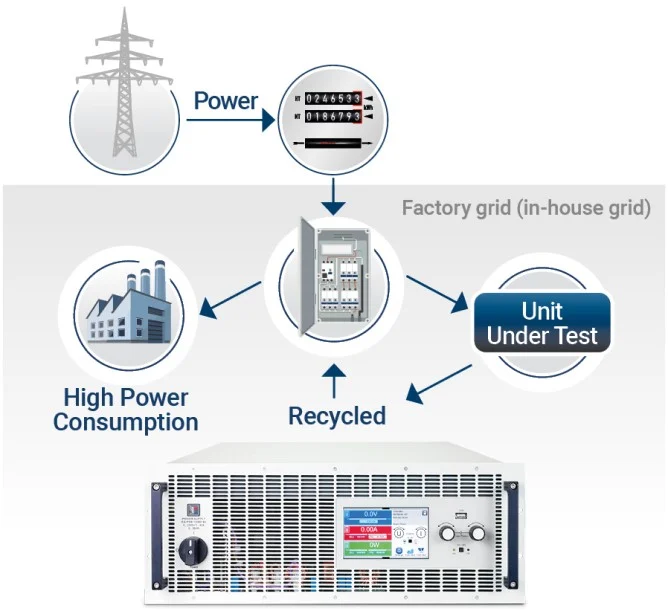
Regenerative loads are ideal for high-demand test applications where both accuracy and efficiency matter:
A bidirectional power supply can both source and sink current, making it ideal for regenerative test environments. Unlike traditional unidirectional supplies, bidirectional units simplify test setups and improve flexibility in applications like battery cycling and motor control.
Your test system is only as strong as your power source. A programmable DC power supply with high resolution, fast response, and regenerative capability will:
Elektro Automatik / Tektronix are an industry leader in regenerative power testing solutions offer high-efficiency systems support up to 96% energy recovery and are trusted by engineers across EV, energy, aerospace, and R&D sectors.
06-10-2026
23-09-2026
16-09-2026
16-09-2026

