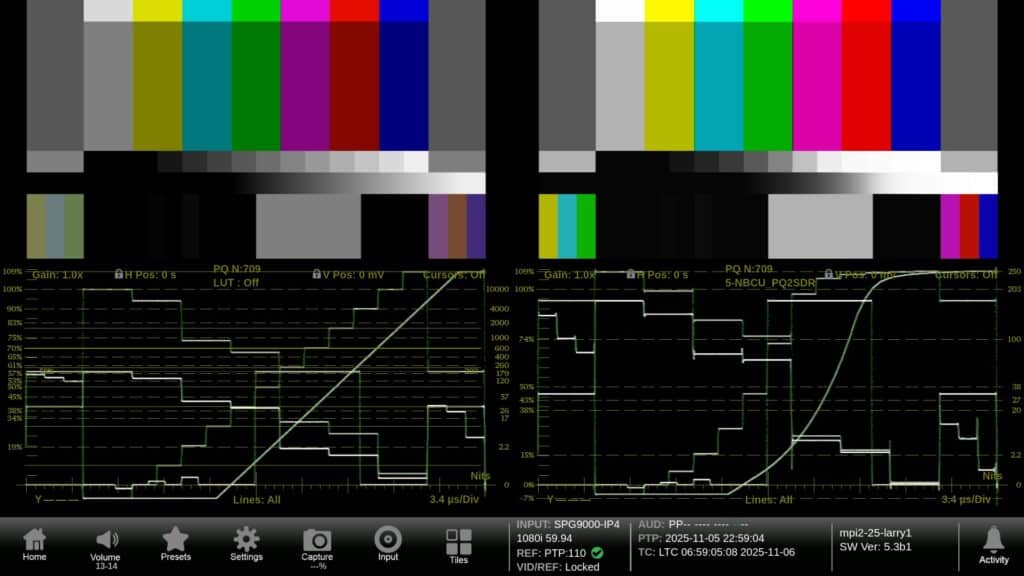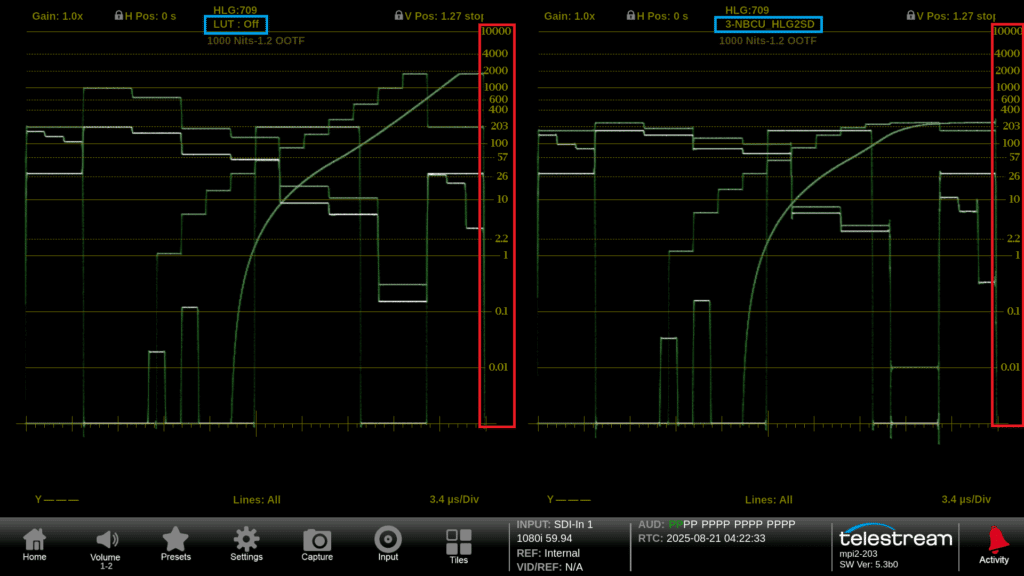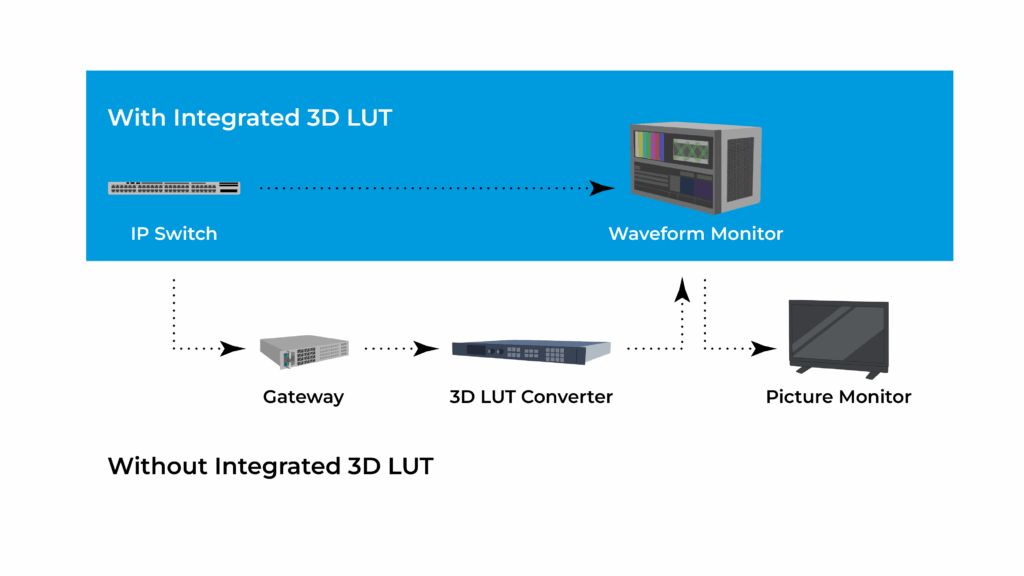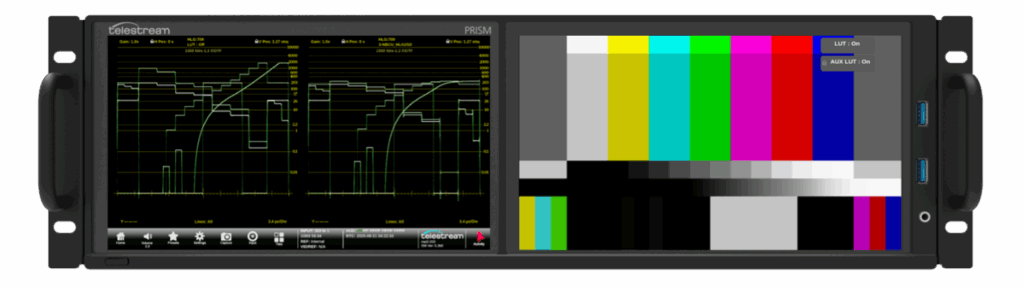
However, comparing these HDR and SDR signal feeds presents a few challenges. First, HDR and SDR signals have different gammas. For example, when users compare 100% white (203nits) brightness between the two feeds, the waveform traces appear at different vertical positions, making direct visual comparison challenging and requiring extra interpretation. In addition, monitoring both HDR and SDR feeds typically requires multiple picture monitors, external 3D LUT boxes, and physical controls to toggle between LUTs at the technical director’s position, resulting in a more complex system and workflow setup.
PRISM 5.3 Simplifies HDR / SDR Monitoring in Live Broadcasts
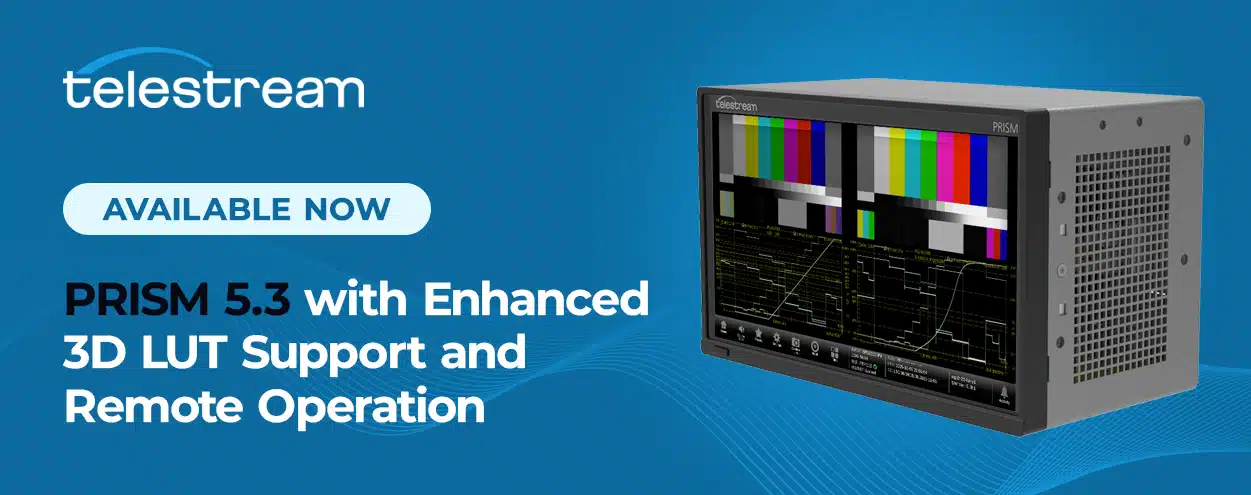
As a follow-up to the recent blog post, Enhancing HDR/SDR Live Broadcasting with New PRISM 3D LUT Technology, we discuss in this new blog post how PRISM version 5.3 introduces powerful new tools to address these monitoring challenges.
The challenge of cumbersome waveform interpretation in HDR / SDR signal comparison comes from different vertical scales in waveform application. PRISM offers Stop display to present the signals in different gammas with a consistent normalized “linear to light” logarithm vertical scale, allowing users to compare the brightness of the signals immediately helping them to make quick decisions. The integration of 3D LUT conversion within the STOP display application, helping to streamline the HDR/SDR broadcast workflow for technical directors.